Hormuz: A Bold Script for Streetwear and Urban Branding
Finding a font that captures genuine street culture without feeling cliché is a common challenge. Many typefaces try to emulate urban energy but end up looking generic or overused. Hormuz is a different kind of tool. It’s a bold, handwritten script font built from the ground up for designers who need to inject raw attitude and modern edge into their work. This isn’t just another script; it’s a statement piece designed for high-impact visuals.
Understanding the Visual Personality of Hormuz
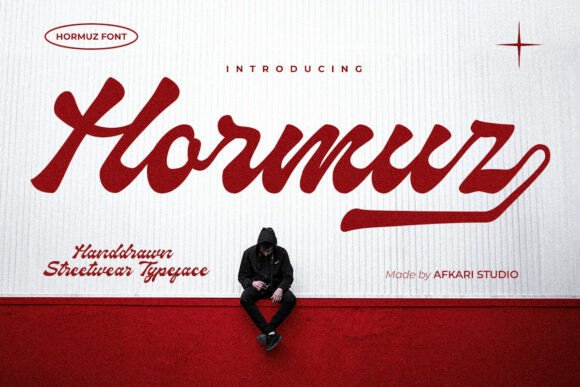
At its core, Hormuz is defined by its thick, confident strokes and dynamic, fluid curves. The letterforms have an expressive, hand-drawn quality that feels immediate and authentic, much like a skilled graffiti tag or a quick sketch in a designer’s notebook. This creates a powerful visual tension: the fluidity of a handwritten script combined with the solid, assertive presence of street-style typography. The result is a typeface that commands attention without shouting. It has a natural rhythm and flow that makes headlines pop and logos memorable.
Unlike a traditional serif font or a clean sans serif font, Hormuz operates in a different space. It’s a premium display font meant for moments where personality is the priority. The special alternates and ligatures included allow you to customize words, preventing repetitive letterforms and adding a layer of authentic, crafted detail. This level of customization is crucial for creating unique brand identities that don’t look like they were assembled from a standard template.
Where Hormuz Makes Its Mark: Practical Applications
The real test of any creative font is its versatility across projects. Hormuz thrives in environments where bold expression is key. For fashion brands and streetwear labels, it’s an obvious fit. Imagine it on hang tags, apparel graphics, or the primary logo for a new drop. Its energy aligns perfectly with the culture, making the brand feel immediate and connected to its audience.
Beyond apparel, consider its use in music artwork. Album covers, gig posters, and social media announcements for artists in hip-hop, electronic, or alternative genres benefit from Hormuz’s raw vibe. It helps establish an artist’s visual brand as something current and confident. For social media content, it’s a secret weapon for creating scroll-stopping graphics. Use it for key quotes, announcement banners, or profile headers to add instant personality and improve engagement.
The applications extend into broader branding and marketing as well. A startup targeting a young, urban demographic might use Hormuz for its wordmark or key marketing headlines to establish a fearless brand identity. In editorial design, a magazine feature on street culture or modern art could use Hormuz for pull quotes or section dividers to reinforce the theme. Even packaging design for products like craft beverages, street snacks, or lifestyle accessories can leverage its style to stand out on a crowded shelf.
Integrating Hormuz Into Your Design Workflow
Choosing a font like Hormuz requires a strategic approach. First, evaluate the project’s core message. If the goal is to convey tradition, stability, or quiet elegance, a classic serif font or a geometric sans serif font is likely a better choice. Hormuz is for projects that need to communicate innovation, energy, rebellion, or cutting-edge style. It’s about making a connection with an audience that values authenticity and boldness.
Testing font pairings is non-negotiable. Hormuz has a strong personality, so it needs balance. Pair it with a neutral, highly legible sans serif font for body text. A clean grotesque or neo-grotesque typeface works well to provide contrast without competing. The key is to let Hormuz dominate the headlines and display text while the supporting font handles the readable paragraphs. This creates a clear visual hierarchy that guides the viewer’s eye effectively.
Practically, the font’s compatibility is a major strength. Hormuz works seamlessly across major design software like Adobe Illustrator, Photoshop, and InDesign, as well as Microsoft Word. The PUA encoding ensures all characters, including special alternates, are fully accessible without needing extra design software. This makes it a reliable asset for both professional designers and creators who work outside traditional design suites. Always review the full character set in your chosen software before finalizing a design to explore all the expressive options available.
Making the Decision: Is Hormuz the Right Fit?
Consider the technical and legal aspects. Hormuz is provided in OTF, TTF, and WOFF2 formats, covering desktop and web use. Its multilingual support for characters like ä, ö, ü, and ß makes it suitable for projects targeting German-speaking markets or other European languages that use these diacritics. This attention to detail adds professional polish.
When evaluating its fit, think about long-term brand consistency. A font like Hormuz becomes a core part of a brand’s visual vocabulary. It should be used consistently across all touchpoints—from the website header to social media posts to print materials—to build recognition. Its powerful presence ensures that even a small application, like a favicon or a social media icon, retains its distinctive character.
Ultimately, Hormuz is more than just a design asset; it’s a tool for building a specific kind of connection. It’s for the designer creating a logo for a new streetwear startup, the marketer crafting a campaign for a music festival, the entrepreneur building a brand that speaks to urban culture, or the content creator looking to make their visuals feel more alive. It brings a raw, stylish, and confident energy that helps projects not just get seen, but remembered.